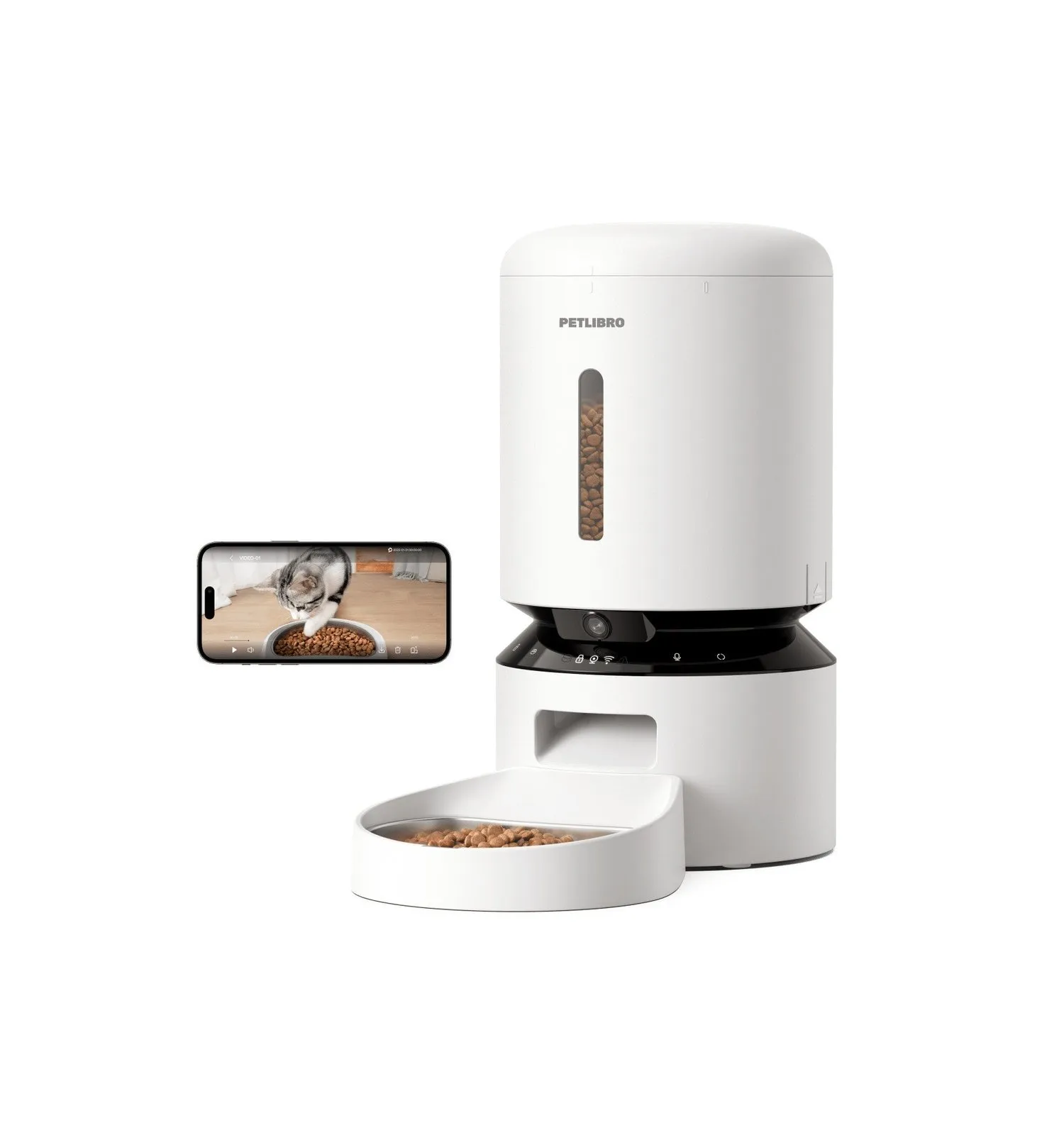
PETLIBRO vs PetSafe: Which Automatic Pet Feeder Fails Less?
The short answer: PetSafe Smart Feed is the safer automatic feeder: 4.0/5 across ~2,100 Amazon ratings, no subscription, and an auger that jams less than PETLIBRO’s rotating disc. PETLIBRO’s camera feeder scores higher (4.2/5, 11,694 ratings), but its one-star pool documents crushed kibble, disc spin faults, and app features removed by firmware updates. Both fail, in different ways. Data: Trustpilot, Amazon, and Reddit, August 2026.
I spent a morning with both brands’ review pages open in side-by-side tabs, Trustpilot on the left, Amazon sorted by one star on the right, YouTube comments and Reddit threads stacked underneath. It took about three hours of scrolling before I trusted what I was seeing. The first surprise was how good the averages look. Automatic feeders are the strongest-reviewed category in smart pet devices, and both of these sit above 4.0 stars on Amazon. The second surprise was what the averages hide, and that took longer to untangle.
PETLIBRO’s camera feeder holds 4.2/5 across 11,694 Amazon ratings with an 11% one-star share, and its Trustpilot profile sits at 3.8/5 across 841 reviews where 28% are one star. PetSafe’s Smart Feed sits at 4.0/5 across roughly 2,100 Amazon ratings, with a one-star share closer to 20%. Same August 2026 listings, same price band: $122.99 (list $139.99) for the PETLIBRO camera feeder, $120.99 (list $139.99) for the PetSafe Smart Feed.
Read past the averages and the failure modes split cleanly. PETLIBRO owners talk about crushed kibble and portions landing off-target. PetSafe owners talk about an app that skips meals entirely. Different weak points, same money, same 2-10mm kibble requirement printed in both manuals. The mechanism matters more than the brand, and that’s where I started.
The mechanism decides how these feeders fail, and the reviews prove it. PETLIBRO’s camera feeder uses a rotating disc; PetSafe Smart Feed uses an auger that pushes kibble toward the chute. Both are specified for 2-10mm kibble, and both fail in documented ways. PETLIBRO owners report kibble crushed between disc and housing, portions landing off-target, and a diabetic-cat owner calling the feeder “not accurate at all.” PetSafe owners report an app that skips meals, units that go offline entirely, and manual-feed buttons that fail to connect. Firmware makes it worse: a four-year PETLIBRO owner lost one function per update, first the recorded voice, then sound alerts, then low-food and offline notifications, until her cat went without food three times. On price both sit in the same band, $122.99 for the PETLIBRO camera feeder and $120.99 for the PetSafe Smart Feed. The failure modes split cleanly: crushed kibble and off-target portions on one side, offline apps and missed meals on the other.
How good do the ratings actually look?
The short answer: both look better than they are. PETLIBRO’s camera feeder shows 4.2/5 across 11,694 Amazon ratings and 3.8/5 on Trustpilot, while PetSafe Smart Feed shows 4.0/5 across roughly 2,100 ratings — but the one-star pools hide meal-level failures.
Here’s the short version of the numbers, all pulled from the same August 2026 listings:
| Feature | PETLIBRO camera feeder | PetSafe Smart Feed |
|---|---|---|
| Amazon rating (Aug 2026) | 4.2/5 (11,694 ratings) | 4.0/5 (~2.1K ratings) |
| 1-star share (Amazon) | 11% | ~20% |
| Trustpilot | 3.8/5 (841 reviews) | Few reviews |
| 1-star share (Trustpilot) | 28% | n/a |
| Price (Aug 2026) | $122.99 (list $139.99) | $120.99 (list $139.99) |
| Dispensing mechanism | Rotating disc | Auger (screw) |
| Kibble size spec | 2-10mm | 2-10mm |
| Battery backup | D cells; Wi-Fi drops on battery | Battery backup; Wi-Fi dies when offline |
| Wet food support | Polar line (refrigerated) | Not supported |
| Known failure modes | Crushed kibble, update-cut features, disc spin faults | App offline, portion drift, missed meals |
I ran the same reputation data through a wider lens in the PETLIBRO vs PetSafe vs PETKIT reputation showdown, and the pattern holds there too: happy owners are real, failures are real, and both groups are describing the same product lines. Nobody is lying. The averages just aren’t telling you which group you’ll land in.
Which dispensing mechanism fails less: disc or auger?
The short answer: neither wins outright. PETLIBRO’s rotating disc crushes kibble and lands portions off-target, while PetSafe’s auger jams on large or irregular kibble; both handle standard 2-10mm kibble.
PETLIBRO uses a rotating disc. PetSafe uses an auger, a screw that pushes kibble toward the chute. Both are supposed to handle 2-10mm kibble, and both have documented ways of going wrong.
The disc is the cruncher. Owners report kibble getting crushed between the disc and the housing, plus portions that land off-target. A diabetic cat owner called the PETLIBRO “not accurate at all,” which is the scariest sentence in this whole comparison, because for medical feeding accuracy is the entire point. Ana (US, verified Amazon purchase) feeds kibble smaller than the recommended size and says the food comes out slowly, with pieces occasionally breaking on the way down. The DIY Smart Home Hub troubleshooting roundup fills in the mechanics: portions run inaccurate for the first several feedings and stabilize around the sixth, dispensing stops entirely when the hopper drops below 50%, and kibble over 10mm blocks the chute.
The extreme case comes from the wet-food side of the lineup. Stefano Barboro (IT, Trustpilot) watched his Polar feeder’s disc take over:
The disc starts spinning and won’t stop.
The auger crushes less but jams more. PetSafe owners who ignore the 2-10mm spec and feed large or irregular kibble get wedged screws. PetSafe’s own support library has a dedicated page for “not dispensing the correct amount of food,” which lists low food and priming as the usual causes. One r/homeautomation owner did note the Smart Feed’s bowl is more solidly attached than older PetSafe models, which fixes a genuinely annoying rattle.
Neither mechanism wins. With standard kibble both work; with anything unusual, both complain. I went through the disc hardware and the calibration quirks in more detail in my full PETLIBRO feeder review, but the takeaway here is simple: the brand matters less than the kibble you feed.
Which app is more likely to skip a meal?
The short answer: both can. PETLIBRO’s app freezes, drops connections, and loses features to firmware updates; PetSafe’s manual-feed button and app can go offline entirely, including missed meals for owners abroad.
A feeder that dispenses on schedule is only as good as the app that schedules it, and both apps leak.
PETLIBRO’s app complaints start with a YouTube commenter named RJT629:
App Freezes constantly This is JUNK
Owners report dropped connections and delayed notifications. Annoying at home, dangerous when you’re traveling and relying on the notification to confirm dinner happened.
PetSafe’s are worse in one specific way: the feeder works on schedule, but the manual-feed button fails to connect and units go offline entirely, including for owners abroad. In the Chinese-language reviews the recurring theme is “APP 故障漏喂、频繁离线,” which translates to app failure, missed feedings, frequent offline.
Then there are the firmware updates, and this is where PETLIBRO’s record gets grim. Dilek Mir Tekin, a four-year owner with a verified Amazon purchase, lost one function per update: first the recorded voice, then sound alerts, then low-food and offline notifications, then motion activation entirely. She writes:
Resetting is not working for all issues.
The missing notifications meant her cat went without food three times over four years before she caught it. Three times, because of software she didn’t ask to install.
PetSafe’s offline problem at least has an official explanation: the feeder supports 2.4GHz Wi-Fi only, and the support library tells owners to remove mesh networks and Wi-Fi extenders. The Reddit case is harsher. A two-cat household on r/cats posted the headline and the evidence together:
Cat wasn’t fed a meal since Thursday because the Petsafe app
Their feeding records and low-food alerts were dead at the same time. One app failure, two hungry cats, zero warning.
What happens when you file a warranty claim?
The short answer: PETLIBRO’s claims become a gauntlet of videos, fan checks, and temperature readings, while PetSafe’s support library documents known issues but the app-failure reports keep coming anyway.
The devices fail early enough that support becomes the real product decision. Reddit r/CatAdvice (July 2023) put it well:
it works great when it works… but it doesn’t work after less than a year. go on amazon and read the 1-star reviews, then you get the real story.
Stefano, the Polar owner from earlier, describes “worst reliability”: units failing “every two or three months,” an average lifespan of “6-7 months,” and over ten units ordered. Ten. A BBB complaint tells the same story from the other side: a wet food feeder stopped refrigerating, PETLIBRO replaced it under warranty, and the replacement failed too.
Then the support itself. Tony Knight (GB) describes warranty claims met with requests for videos, fans, and temperature readings: “creating barriers not resolving.” Sam (NL) reports the app kept charging a subscription after cancellation through Google Play, with each side pointing at the other. And the four-year owner who lost a feature per update was told her device was out of warranty and offered a small percentage discount on a new unit, which she called insulting. Her closing line: “Never trust a brand that doesnt stand for their products.”
PetSafe’s support library at least covers offline and portion issues in detail, which means the problems are known and there’s a paper trail. The app failure reports keep coming anyway.
Are the good reviews real?
Yes, the good reviews are real. Owners with working units genuinely praise scheduled feeding, portion control after calibration, and easier travel; the complaints cluster exactly where hardware meets software.
The 4-5 star share is the majority for both brands, and it’s not hard to see why. Owners with working units report the core value is real: scheduled feeding works, portion control is consistent after calibration, travel gets easier. Nobody complains about the basic job, dispensing standard kibble on a timer. The complaints cluster exactly where hardware meets software: calibration, connectivity, and updates.
The camera models earn genuine praise for meal confirmation while away, and honestly the extra $30-50 buys mostly peace of mind; a cheap separate camera does the same job. I collected the full picture of what owners actually praise across every smart pet category in the 2026 roundup of what pet owners love, and the pattern repeats: the hardware earns the good reviews, the software earns the bad ones.
Which feeder fits which household?
The short answer: PetSafe fits simple dry-food schedules and multi-cat homes with its microchip-door model, while PETLIBRO fits owners who want a camera feeder or the refrigerated Polar for wet food.
Diabetic and senior pets. Precision is the whole point, and “not accurate at all” is the risk. Weigh portions with a kitchen scale for a week before trusting any feeder with medical feeding, and keep a manual backup.
Veterinary guidance from the American Veterinary Medical Association (AVMA) emphasizes that consistent, measured meals are central to weight management and diabetic care in cats, which is why portion drift is a medical risk rather than a convenience flaw.
Multi-cat homes. PetSafe’s microchip door models only open for the tagged cat, which is real per-cat portion control. Just remember the r/cats case: when the app dies, feeding records and low-food alerts die with it.
Travel. A feeder that misses meals while you’re away is worse than none. Test the schedule for a week first. The camera models let you confirm meals remotely.
Wet food. The PETLIBRO Polar is the only mainstream refrigerated option, and a Reddit owner returned it with a summary that says it all:
It’s the only one refrigerated on the market. But the design/programming is so faulty, I had to return it.
Apartments and small spaces. The constraint is Wi-Fi, not size. PETLIBRO’s battery mode drops Wi-Fi by design, and PetSafe needs a stable 2.4GHz signal with no mesh network. Put the feeder near the router.
Power outages. Battery backup runs the schedule for days but kills notifications and manual feed. If outages are common, pick a model with battery backup and a fallback schedule. The smart pet devices category guide walks through how each category handles power, support, and subscription surprises.
What should you test before trusting a feeder with dinner?
The short answer: match the mechanism to your kibble, run the app for a week at home, weigh portions for medical feeding, search the update history, plan for power loss, and buy from a channel with easy returns.
Match the mechanism to your kibble. Standard 2-10mm kibble: either works. Large breed kibble: augers jam more, discs crush more. Read the manual’s spec before you buy.
Run the app for a week while you’re home. Set up the schedule, then check whether notifications arrive and manual feed responds. The r/cats household learned the hard way that the app can die without warning.
Weigh the portions for medical feeding. Kitchen scale, seven days, before you leave a diabetic cat alone with it. “Not accurate at all” is a review you don’t want to discover after the fact.
Search the model name plus “update” before you buy. Dilek Mir Tekin lost a feature on every firmware update for four years. If the update history is full of removed functions, assume yours will be too.
Plan for power loss. Battery backup keeps the schedule alive for days, but Wi-Fi features die on battery. A feeder that can’t dispense on schedule defeats the purpose.
Buy from a channel with easy returns. A feeder that dies at month 11 with a 12-month warranty and no spare parts is a disposal problem. Amazon’s return window beats a warranty fight by email.
Which feeder should you buy?
The short answer: buy the PetSafe Smart Feed for the simplest no-camera, no-subscription unit, and test it for a week first. If meal confirmation while you’re away is a must-have, pair the feeder with a cheap local-storage camera; the PETLIBRO camera feeder sits on the do-not-recommend side of our register.
- PetSafe Smart Feed (see it on Amazon). The pick if you want the simplest unit: no camera, no subscription, a schedule that mostly holds, and a bowl that’s actually attached. Bring your own stable 2.4GHz Wi-Fi and skip mesh networks. This is the option I’d hand to someone who just wants meals dispensed and doesn’t want to think about firmware again.
- PETLIBRO camera feeder (deliberately without a buy link). Not our pick, even if meal confirmation while you’re away is a must-have and you’d rather run one device than a feeder plus a separate camera. Buy it knowing the update record and warranty fights documented above: test the app for a week before you travel, and buy from a channel with easy returns.
Between the two: if you want the camera, the meal confirmation, and the option of refrigerated wet food later, the answer is a feeder we can stand behind plus a cheap local-storage camera, not this model. The PETLIBRO record this site keeps is why it sits on the do-not-recommend side of our register. If you want the simplest unit with no camera and no subscription, and your Wi-Fi is solid, the PetSafe Smart Feed is the pick. If you feed wet food, the Polar is the only refrigerated game in town; just read the spin-fault reports and the 6-7 month lifespan complaints before you commit.
Neither brand builds a bad feeder. They build feeders that fail in specific, predictable ways, and the reviews tell you exactly which one you’re getting. Pick the failure you can live with, then spend a week testing the app before you trust it with dinner. That week is the cheapest insurance either of these comes with.
FAQ
Which dispensing mechanism is most reliable? Both fail in different ways. Rotating discs crush kibble; augers jam on large pieces. Standard small kibble works with either. The reliability difference is smaller than the app difference between units: PETLIBRO owners report crushed kibble and off-target portions, while PetSafe owners report offline apps and missed meals. Match the mechanism to your kibble first.
What happens when the power goes out? Most feeders have a battery backup that runs the schedule for days, but Wi-Fi features (notifications, manual feed) go offline. If your feeder lacks battery backup, a power outage means missed meals. Pick a model with battery backup and test the fallback schedule before any trip.
Can automatic feeders handle wet food? Not well. Wet food clogs both mechanisms. If you feed wet food, look for a feeder with a cooling compartment (like PETLIBRO’s Polar models), and accept that they need more cleaning. The Polar line has its own failure reports: disc spin faults and software that resets schedules.
Why do portions drift? Calibration settles around the sixth feeding, per the PETLIBRO troubleshooting roundup. After that, kibble size, humidity, and a hopper below 50% all change portion weight. Clean the chute and re-calibrate when you switch kibble brands, and weigh what lands for a week.
Can I trust a feeder for a diabetic cat? Test it. Weigh portions with a kitchen scale for a week, verify the schedule actually fires, and keep a manual backup. The diabetic-cat owner who called the PETLIBRO “not accurate at all” did not have that luxury, and medical feeding has no margin for a missed meal.
Which brand has better support? PETLIBRO’s warranty barriers are documented on Trustpilot (“creating barriers not resolving”), and its four-year owner got a discount offer instead of a fix. PetSafe maintains a thorough official troubleshooting library, but app failure reports continue. Both are email-first; neither has a phone line that reliably answers.
Updated: August 10, 2026. Trustpilot, Amazon, and YouTube data collected August 2026. Review quotes come from verified purchases and named commenters. Prices change; verify before purchase.