Pet Cameras Without Subscription: 2026 Buying Guide
The short answer: the no-subscription pet camera is the smarter 2026 buy: TP-Link Tapo (C210, C225) and PETKIT cover live view, two-way audio, and microSD recording with no plan, while Furbo’s 2.7/5 Trustpilot score, 73% one-star, is dominated by subscription complaints. Two Furbo cameras cost about $120/year in plans, $360 over three years, which buys three or four Tapo units outright. I spent an afternoon with Furbo’s Trustpilot page open in one tab and a calculator in the other, pricing out pet cameras the way you’d price a phone plan before signing.
The score that came out of the review pile is 2.7/5 across 125 reviews, with 73% of them at one star. Read those one-star reviews and the hardware barely comes up. The subscription does, over and over, in the same five patterns.
The most expensive part of a pet camera is not the camera. It’s the line on your credit card statement that shows up every month, under a brand name you stopped thinking about in week two. The pet camera industry has settled into a business model worth understanding before you buy: the device is the bait, the subscription is the business. This guide is the checklist I wish someone had handed me before my first camera, plus the exact math I’d run before any pet camera purchase in 2026.
A subscription pet camera is a recurring purchase dressed as a one-time one. Furbo’s Trustpilot profile sits at 2.7/5 across 125 reviews with 73% at one star, and that one-star pool is dominated by billing and paywall complaints rather than hardware failures: an extra $60/year per camera, a $184 lifetime bundle that still hit a paywall, 50 false barking notifications the day a trial expired, and a £76.71 charge after cancellation. Billing disputes and paywalled features together make up roughly 40% of Furbo’s one-star reviews. The math that matters: a $200 camera plus $60/year runs $380 over three years, while a no-subscription camera is $200 total. Two Furbo subscriptions run $120/year, $360 over three years, which buys three or four TP-Link Tapo base models outright. TP-Link Tapo and PETKIT both sell cameras with live view, two-way audio, and microSD recording that work with no plan, which is why they are the picks in this guide.
When does the subscription paywall appear?
The short answer: one step past the point of no return — after the box is opened, the app installed, and the camera registered, when returning it has become a hassle.
Nathaniel D. Law (US) put it plainly: “It says all over the product page and internet that it doesn’t require subscription for basic features but thats not true!… it’s not till you setup the app that it tells you that you need a sub for all features!!”
That’s the recurring story across the one-star reviews. The paywall isn’t hidden. It’s positioned one step past the point of no return: box opened, app installed, camera registered. Returning it is a hassle by then, so a meaningful share of owners just pay. Corrie in Canada, reviewing the Mini 360, summed up the design philosophy in one sentence: “Everything about it is designed to force you into a subscription.”
Does a “lifetime” plan actually last?
No, in practice. Eric paid $184 for a “lifetime” bundle and still hit a paywall; converted to an annual cost it is $61/year, almost exactly Furbo’s per-camera rate.
Eric in the US paid $184 upfront for a bundled “lifetime” subscription and still hit a paywall. His words: the company “did not include what they sold us… We spent an extra $136 for literally NO BENEFIT.”
A lifetime bundle is a bet that the company keeps honoring the deal forever, and nothing in the review set shows one paying off faster than paying by the year. Convert the price to an annual one and the illusion collapses: $184 over three years is $61/year, almost exactly Furbo’s per-camera annual rate. You’re not buying a deal, you’re prepaying.
How much does each extra camera cost per year?
The short answer: a reported $60 per extra camera on top of the base plan. A three-camera home pays $180/year in surcharges before any price increase.
Shaka Kane in Australia documented a $60/year fee for each additional camera on top of the base plan. He owns three units: $180/year in surcharges before any price increase, which he called out as “Turning off emergency features except to those who can afford it seems gross.”
Multi-camera households get punished twice: hardware cost times the number of units, then subscription cost times the number of units. And the emergency features he’s talking about, smoke and fire alerts, sit behind Furbo’s paid Nanny plan. A brand that holds life-safety features hostage to the renewal is betting you won’t dare cancel. Treat that as disqualifying.
How bad are the false alerts?
The short answer: bad enough to defeat the camera. One reviewer logged 50 false barking notifications in a day, and another’s camera flagged pillows, furniture, and coffee-table objects as cats.
Rebecca in the UK logged 50 false barking notifications on the day her trial expired. Harpreet Malhi’s camera “thinks everything but my cat, is a cat”: pillows, furniture, coffee-table objects all trigger it.
The alert system is the feature that makes a pet camera worth owning, and it’s the one that misfires. During the trial the noise doubles as a push toward the paid plan. After it, false alerts train you to ignore your phone, and missed alerts mean you never learn about real events. For someone traveling with a senior or sick dog at home, that’s not a minor annoyance. That’s the camera quietly becoming an expensive live view with no purpose.
Can they charge you after you cancel?
Yes, Julianne canceled and was still charged £76.71; billing disputes and paywalled features together make up roughly 40% of Furbo’s one-star reviews.
Julianne Yorston in the UK canceled her plan and was still charged: “They have without my knowledge or authorisation taken £76.71 out of my account.” She also noted the support channel is email-only.
Billing disputes and paywalled features together make up roughly 40% of Furbo’s one-star reviews. That’s the largest single reason people leave one star, and it’s not close. If you want the full complaint file, the Furbo 360 review walks through the Trustpilot evidence in depth.
Furbo is the most documented case, but the pattern isn’t exclusive to it. The same review collection turned up Tractive GPS trackers sold with no subscription notice on the purchase page, cancellation requests refused, and charges taken after checkout toggles were switched off. PETLIBRO’s feeder subscription runs $120/year and covers a single device. The common thread: “you’ll find out after you buy” is a pricing strategy, not an accident.
What does the three-year cost comparison look like?
The short answer: a subscription camera at $200 hardware plus $60/year runs $380 over three years, while a no-subscription camera stays $200 total. The difference buys three or four Tapo units.
A subscription camera at $200 hardware plus $60/year runs $380 over three years. A no-subscription camera is $200, total. The difference is a second camera, or a year of treats, or the money you’d spend disputing a charge you already canceled.
Two Furbo subscriptions alone run $120/year. Over three years that’s $360, which buys three or four TP-Link Tapo base models outright, and you own them. Additional units add zero annual fees on a no-subscription setup, which is the whole game for multi-pet, multi-room households. The 3-year cost comparison runs these numbers for Furbo, PETKIT, and Tapo side by side.
What should you check before paying for a pet camera?
The short answer: confirm live view, pan/tilt, audio, and playback work without a plan; prefer microSD loop recording; then read the billing page, the false-alert record, night vision, and pet-profile limits.
Run every candidate camera through these checks. Each one affects what you pay in year three, not just what you see on the price tag.
Live viewing, pan/tilt, two-way audio, and playback must work without a plan. That’s the non-negotiable. Furbo owners report being pushed toward a subscription when cloud storage fills up about a year in, because cloud storage models structurally turn playback into a subscription lever. If the storage lives in the brand’s cloud, the brand holds the replay button.
Expert guidance from Consumer Reports on home security cameras advises knowing where your footage lives and how to cancel before you sign up; the same two questions that decide whether a pet camera is a one-time buy or a recurring bill.
Prefer microSD loop recording, ideally 32GB or larger. Footage stays in your home, you control it, there’s no “storage full, subscribe now” moment, and playback keeps working when the internet drops, which is exactly the scenario cloud cameras can’t handle.
Then read the billing page. Confirm whether a brand account is mandatory, whether core features unlock only after a subscription, and whether the cancellation path is documented and simple. Furbo’s unhonored lifetime plan and post-cancel charges, Tractive’s missing subscription notice: these are “you find out after you pay” costs, and disputing them costs more than the hardware discount was worth.
Check the AI’s false-alert reputation before you buy. Look for independent toggles for pet detection and person detection. “Recognizes the sofa as a cat” is a top complaint in Furbo’s reviews, and it has a real cost. Search the brand name plus “false alerts” or “misdetection” and see how often it shows up in the one-star reviews.
Prefer color night vision (starlight sensors) over black-and-white infrared. Cats and dogs are most active at night, and monochrome footage loses the behavioral detail you bought the camera to see. Color night vision is a recurring positive in Furbo’s favorable reviews, which suggests it’s one of the most noticeable real-world differences. An infrared range of 10 meters or more is the practical floor.
If you have more than one pet, check the profile limit. Furbo recognizes up to three pets, and owners report poor recognition of black cats. Beyond the limit, a multi-pet household is paying for a camera that can’t tell which pet is tearing up the living room. Ask how many profiles it supports, whether it pushes alerts by pet name, and whether it learns from misidentifications.
What’s the pre-purchase checklist?
The short answer: read the plan page, multiply the annual fee by camera count and three years, ask what “lifetime” covers, test alerts for a week, check the cancel path, and search “false alerts.”
- Read the plan page, not the product page. The product page says what the camera can do. The plan page says what you can actually use. Furbo markets “basic features free” and gates everything behind a plan, and reviewers keep discovering the gap only after setup.
- Count your cameras, then multiply by the annual fee and by three years. Furbo charges $60/year per extra camera. PETLIBRO’s plan is $120/year for a single device. Two or three devices multiplies the annual fee by two or three.
- Ask what “lifetime” covers. Eric’s $184 lifetime bundle still required monthly payments for listed features. If the included-features list isn’t written down, assume the paywall survives the bundle.
- Test the alerts for a week before you rely on them. Rebecca got 50 false notifications the day her trial expired. If the camera cries wolf while you’re home, it will be useless noise while you’re away.
- Check the cancel path before you enable anything. Julianne canceled and was charged £76.71 anyway. Is cancellation documented, does auto-renewal turn off, and is there a phone number or only email?
- Search the brand plus “false alerts” or “misdetection.” Harpreet’s camera flagged pillows and furniture as cats. The one-star reviews are the spec sheet nobody prints.
Which no-subscription pet cameras should you buy?
The short answer: TP-Link Tapo C210/C225 for low-cost local recording, and PETKIT’s basic camera/feeder tier for feeding plus monitoring — both with no mandatory plan.
Prices are US retail as of August 2026 and they move around; verify before you buy.
| Budget tier | Recommended models | Subscription | Good for |
|---|---|---|---|
| Low (~$25-40) | TP-Link Tapo C210 / C225 | None ✅, local microSD, pet detection; C225 adds 2K + starlight color night vision | First-time buyers, single-pet homes, plain home monitoring |
| Mid (~$50-100) | PETKIT basic tier (standalone camera or camera feeder) | None ✅, 2-year warranty | Feeding plus monitoring in one device, travel |
| High ($100+) | TP-Link Tapo flagship (2K+ pan/tilt, battery outdoor models), PETKIT upper tier | None ✅, the money goes into hardware, not annual fees | Multi-pet, multi-room homes with a yard |
| Avoid | Furbo (2.7★, subscription wall, false alerts), Petcube (⚠️ same subscription-trap pattern) | ❌ / ⚠️ | Anyone comparing at the same price point, take the no-subscription model |
The shortcut version: check the sensor for image quality, the SD card slot for storage, and the billing page for annual fees. If those three pass, then talk about AI and night vision.
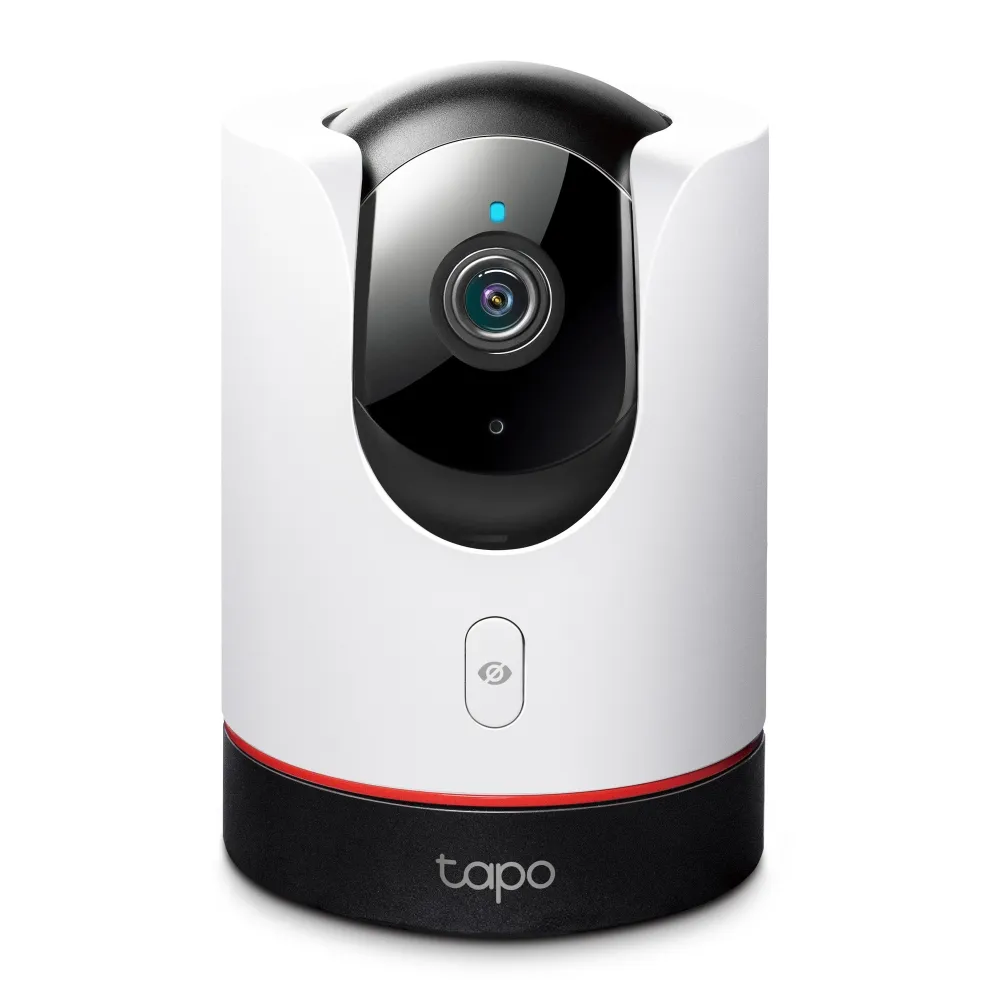
TP-Link Tapo C210 is the no-strings pick: pan/tilt, live viewing, two-way audio, motion alerts, and microSD recording with no mandatory plan, no activation paywall, and no per-camera surcharge. I go through the full teardown in the TP-Link Tapo review. Step up to the C225 for 2K resolution and starlight color night vision: see it on Amazon. It’s a camera, not a treat dispenser, but it does the job every day without ever asking you to open a billing screen.
PETKIT’s basic camera/feeder tier is the pick when you want feeding and monitoring in one device: live video, two-way audio, scheduled feeding without a subscription wall, backed by a 2-year warranty (on Amazon). Its app gates a few advanced features, and its Trustpilot profile (3.5/5) is healthier than Furbo’s. The real difference is the model: the product works without a plan, and the warranty outlasts the honeymoon period.
What’s the bottom line on no-subscription cameras?
The short answer: “no subscription” is the sensible 2026 default; TP-Link Tapo and PETKIT keep working without a plan, and the subscription is a forever purchase dressed as a feature.
“No subscription” isn’t a compromise in 2026, it’s the sensible default for a pet camera. The two options with the steadiest record are TP-Link Tapo and PETKIT, and neither one makes you pay monthly to keep using what you bought. For the other side of the ledger, the roundup of what pet owners actually love in 2026 covers 60+ five-star reviews across the category.
The camera is a one-time purchase. The subscription is a forever purchase dressed up as a feature. Buy the one, skip the other.
Disclosure: the links above are affiliate links. If you buy through them, we may earn a commission at no extra cost to you.
FAQ
Do no-subscription pet cameras have worse video quality? No. Models like the TP-Link Tapo C225 now offer 2K resolution with color night vision, comparable to subscription cameras like Furbo. Subscriptions mostly pay for cloud storage and cloud AI processing; local SD recording plus on-device pet detection covers most daily use.
Is local storage less secure or easier to lose? The opposite. Footage stays on the SD card in your home and never passes through the brand’s servers. Look for models with microSD encryption and export important clips periodically. A bonus: playback keeps working when your internet goes down, which cloud-only cameras can’t do, and a 32GB card holds days of footage.
What is the cheapest way to run 2-3 pet cameras? Buy no-subscription cameras, because additional units add zero annual fees. Two Furbo cameras cost about $120/year in subscriptions alone, or $360 over three years. That money buys three or four TP-Link Tapo base models outright, and you own them with no billing screen in sight.
I canceled my subscription but got charged anyway. What do I do? This is a documented Furbo pattern: one UK owner was charged £76.71 after canceling. Turn off auto-renewal immediately, keep the cancellation confirmation and charge records, then dispute the charge through your card issuer or payment provider. For the next purchase, run the red-flag checklist in this guide.
Do multi-pet households need a camera with multi-pet recognition? Depends on your setup. Furbo recognizes up to three pets and owners report low recognition rates for black cats, so households beyond that limit need a higher-capacity no-subscription model. Single-pet households should spend the budget on night vision and local storage instead.
Which pet camera brands have no subscription at all? TP-Link Tapo (C210, C225, and the higher-end pan/tilt models) and PETKIT’s basic camera and feeder tiers run without a mandatory plan. Live viewing, two-way audio, motion alerts, and SD recording work out of the box, and PETKIT adds a 2-year warranty.
Updated: August 12, 2026. Trustpilot data and review quotes collected August 2026 from furbo.com and related profiles, with reviewer names as shown on the platform. Prices are US retail estimates and change; verify current pricing before you buy.